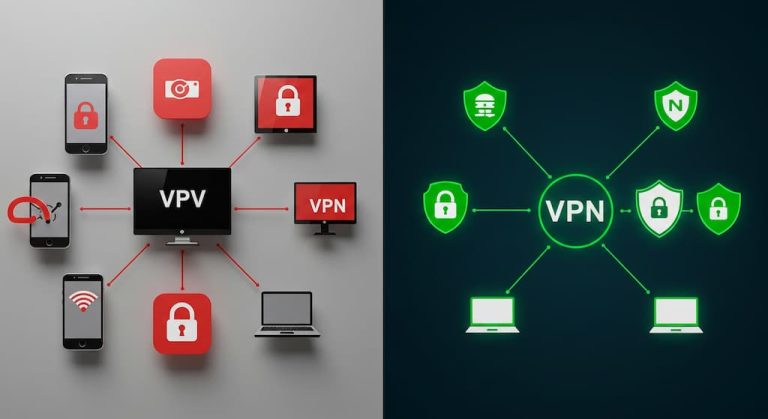

Securing Tomorrow’s Workforce: Navigating Remote Work Security Trends 2026 with Dedicated Static IPs
The landscape of remote work has shifted from a temporary solution to a permanent, integral part of global business operations. While this evolution offers unparalleled flexibility and access to diverse talent pools, it simultaneously presents IT managers with a constantly evolving array of security challenges. The convenience of remote access often comes hand-in-hand with an expanded attack surface, sophisticated cyber threats, and the complexities of maintaining compliance across distributed environments. As we look towards remote work security trends 2026 and beyond, the imperative for robust, proactive security measures has never been more critical. Traditional perimeter-based defenses are proving inadequate against today’s agile adversaries, leaving organizations vulnerable to data breaches, ransomware, and identity compromise.
IT managers are on the front lines, grappling with the profound user pain point of evolving remote threats. They must not only protect corporate assets but also ensure seamless, secure access for employees working from various locations, often using a mix of corporate and personal devices. The quest for security often clashes with the demand for usability and efficiency. This article dives deep into the technical intricacies of securing a remote workforce, dissecting the pitfalls of outdated methods, and highlighting how a dedicated static IP address from CityStaticVPN offers a strategic advantage in navigating the complex remote work security trends 2026 and building a truly resilient security posture.
The Technical Risks: Why Evolving Remote Threats Persist
The shift to widespread remote work has fundamentally altered the cybersecurity paradigm, dissolving traditional network perimeters and introducing a myriad of technical vulnerabilities that contribute to the proliferation of evolving remote threats. Historically, corporate networks were protected by a robust firewall, acting as a castle wall around internal resources. Today, with employees accessing critical systems from home networks, coffee shops, and co-working spaces, that wall has crumbled, scattering endpoints across an untrusted internet.
This distributed architecture significantly expands the attack surface. Every remote device, every home router, every cloud service accessed becomes a potential entry point for attackers. We’re seeing a surge in identity-based attacks, such as sophisticated phishing campaigns designed to steal credentials for SaaS applications and internal systems. Once credentials are compromised, attackers can bypass traditional network defenses and move laterally within cloud environments. Furthermore, the rise of IoT and BYOD (Bring Your Own Device) policies introduces unmanaged or partially managed endpoints into the corporate ecosystem, creating shadow IT risks and making consistent patch management and security policy enforcement incredibly challenging. Malware and ransomware continue to evolve, employing polymorphic tactics and AI-driven evasion techniques, making detection and prevention a continuous arms race. These factors collectively define the technical landscape shaping the remote work security trends 2026, demanding a paradigm shift from reactive defense to proactive, identity-centric security strategies that account for the ‘anywhere’ workforce.
The Hidden Dangers of “Free” and Shared VPNs
Many organizations, particularly those new to extensive remote work or operating on tight budgets, initially turn to “free” or shared VPN services as a seemingly quick fix for remote access. However, these options harbor significant hidden dangers that can exacerbate, rather than mitigate, evolving remote threats. The most prominent issue is the “Bad Neighbor Effect.” When multiple users share a single IP address, the malicious activities of one user can inadvertently blacklist the entire IP for everyone else. Imagine an employee trying to access a critical banking portal, CRM system, or cloud application, only to be blocked because another user on the same shared IP was engaged in suspicious activity like spamming, botnet attacks, or credential stuffing.
This often leads to infuriating CAPTCHA challenges, repeated security checks, or outright denial of service from business-critical websites and applications, significantly hindering productivity and trust. For IT managers, this means constant troubleshooting, user frustration, and the potential for reputational damage. Furthermore, shared IPs make it nearly impossible to implement effective IP whitelisting for sensitive internal resources, as the IP address is dynamic and constantly changing or shared with untrusted entities. Audit trails become muddled, making incident response and forensic analysis a nightmare. Instead of providing robust security, shared VPNs introduce instability, unpredictability, and a heightened risk profile, fundamentally failing to address the sophisticated remote work security trends 2026 demands for stable, identifiable, and trustworthy connections.
Comparison: Standard VPN vs. Dedicated Static IP for Remote Work Security
Understanding the nuanced differences between a standard, shared VPN and a dedicated static IP is crucial for IT managers planning their cybersecurity strategy for the future of remote work. While both provide encrypted tunnels, their implications for security, reliability, and management are vastly different, especially when considering the remote work security trends 2026.
| Feature | Standard (Shared) VPN | Dedicated Static IP |
| IP Address Type | Dynamic, shared among many users | Fixed, unique to your organization/user |
| Security Posture | Vulnerable to “bad neighbor” effect; higher risk of blacklisting | Enhanced security; stable, trusted online identity |
| Access Reliability | Prone to CAPTCHAs, service blocks, geo-restriction issues | Consistent, reliable access to critical business resources |
| Whitelisting Capability | Impractical or impossible; IP changes frequently | Enables precise IP whitelisting for enhanced access control |
| Audit & Compliance | Difficult to trace individual user activity | Clear audit trails linked to a specific, trusted IP |
| Trust & Reputation | Lower trust score from online services due to shared history | High trust score; reduces suspicious activity flags |
| Cost-Efficiency | Appears cheaper; hidden costs from access issues & security incidents | Higher initial cost; long-term savings in productivity & security |
This comparison highlights the fundamental trade-offs. A standard VPN, while offering basic encryption, often falls short in providing the stable, trusted identity and granular control essential for securing modern remote operations. The shared nature of the IP addresses can lead to unpredictable access issues and a diminished security posture. In contrast, a dedicated static IP provides a singular, consistent digital footprint. This consistency is invaluable for whitelisting access to sensitive applications, simplifying audit logs, and ensuring uninterrupted access to critical online services that frequently block shared IPs. For IT managers looking to mitigate the complex remote work security trends 2026, the stability and control offered by a dedicated static IP make it a foundational element for a robust security framework.
Why a Dedicated Static IP is the Solution for Evolving Remote Threats
CityStaticVPN’s dedicated static IP addresses are engineered to directly address the complex user pain point of evolving remote threats, providing IT managers with a powerful tool to fortify their security posture for the remote work security trends 2026. Unlike shared VPNs, a dedicated IP provides a unique, unshared digital identity for your remote workforce, unlocking a range of security and operational benefits.
Firstly, precise whitelisting becomes a reality. IT managers can configure firewalls and application access controls to permit connections only from their dedicated static IP. This drastically shrinks the attack surface by preventing unauthorized access attempts from unknown IPs to sensitive corporate resources like CRM, ERP, internal development servers, and cloud environments. Secondly, it establishes a consistent digital identity for all remote traffic originating from your team. This consistency simplifies audit logs, making it far easier to trace user activity, detect anomalies, and comply with regulatory requirements such as GDPR, HIPAA, or SOX. Incident response is streamlined, as suspicious activity can be quickly correlated with a known, trusted source.
Moreover, a dedicated static IP bypasses the common issues of blacklisting and CAPTCHA fatigue associated with shared IPs. Your team gains uninterrupted access to vital SaaS applications, financial services, and web portals, maintaining productivity without constant security interruptions. This stability enhances trust with third-party vendors and online platforms. Lastly, CityStaticVPN’s dedicated IPs offer enhanced geo-security, allowing organizations to lock remote access to specific geographic regions, adding another layer of defense against sophisticated, geographically diverse threats. By providing a stable, secure, and controllable access point, CityStaticVPN empowers IT managers to not just react to evolving threats, but proactively secure their remote operations against the challenges of remote work security trends 2026. Get your Dedicated IP and elevate your security today.
Step-by-Step Guide: How to Use a Static IP for Secure Remote Work
Implementing a dedicated static IP is a strategic move for IT managers aiming to strengthen their remote work security against the backdrop of remote work security trends 2026. Here’s a practical, step-by-step guide to integrate this powerful solution into your existing infrastructure:
- Acquire Your Dedicated Static IP from CityStaticVPN: The first step is to obtain your unique, unshared static IP address. CityStaticVPN provides dedicated IPs tailored to your specific location and bandwidth needs. This ensures your remote team has a stable and predictable online presence, forming the foundation of your enhanced security.
- Configure Endpoints and Gateways: Once acquired, configure your remote workers’ devices (laptops, desktops) or network gateways (routers at small branch offices/home offices) to route their internet traffic through the dedicated static IP. This can often be done via VPN client software provided by CityStaticVPN or by configuring network settings directly on the devices, ensuring all corporate-bound traffic originates from your designated IP.
- Implement IP Whitelisting on Corporate Resources: This is where the dedicated IP truly shines. Access your corporate firewalls, cloud application settings (e.g., Salesforce, SharePoint, internal databases), and internal network resources. Configure these systems to only accept incoming connections from your dedicated static IP. This creates an exclusive, trusted access corridor, drastically reducing the attack surface by blocking all other external IP addresses.
- Integrate with Existing Security Tools: Seamlessly integrate your dedicated IP with your Security Information and Event Management (SIEM) systems, Intrusion Detection/Prevention Systems (IDS/IPS), and other security analytics platforms. The consistent origin point simplifies log analysis, making it easier to identify anomalous behavior or potential threats specific to your remote workforce.
- User Training and Policy Enforcement: Educate your remote team on the importance of using the dedicated IP for all work-related activities. Establish clear policies on its usage, emphasizing that bypassing it could compromise security. Reinforce best practices for password hygiene and phishing awareness.
- Continuous Monitoring and Auditing: Regularly monitor traffic originating from your dedicated IP for any unusual patterns. Perform periodic audits of your whitelisting rules and access logs. This proactive approach ensures that your dedicated IP infrastructure remains secure and compliant as remote work security trends 2026 continue to evolve. This vigilant oversight is key to maintaining a strong security posture for your distributed workforce. Check pricing to get started.
Advanced Tips for IT Managers
As IT managers navigate the intricate landscape of remote work security trends 2026, leveraging dedicated static IPs effectively requires a strategic, layered approach. Here are some advanced tips to maximize security and operational efficiency:
- Integrate with Zero Trust Network Architecture (ZTNA): While a dedicated IP provides a trusted network ingress, combine it with ZTNA principles. This means that even traffic from the dedicated IP is subject to continuous verification of user identity, device posture, and application access. A dedicated IP complements ZTNA by providing a stable, verifiable network context for identity and device checks, enhancing the overall trust decision.
- Enforce Strict Multi-Factor Authentication (MFA): Never rely solely on an IP address for authentication. Mandate strong MFA across all critical applications and services. The dedicated IP acts as an additional contextual factor, making unauthorized access from an unknown IP even more suspicious when combined with a compromised credential.
- Regular Security Audits and Penetration Testing: Periodically audit your dedicated IP configurations, whitelisting rules, and overall network security. Engage in external penetration testing to identify potential vulnerabilities that might be exploited by sophisticated attackers targeting your remote infrastructure.
- Advanced Threat Intelligence Integration: Feed logs and traffic data from your dedicated IP into your threat intelligence platforms. This helps in proactively identifying emerging threats and indicators of compromise relevant to your specific remote work environment, staying ahead of the curve as remote work security trends 2026 evolve.
- Segmented Access with Multiple IPs: For larger organizations or those with highly sensitive data, consider acquiring multiple dedicated static IPs for different departments or security zones. This allows for even more granular control and limits the blast radius in case of a breach, offering a more resilient architecture.
- Automated Policy Management: Leverage automation tools to manage IP whitelisting policies across numerous cloud services and applications. This reduces manual effort and ensures consistency, crucial for maintaining security at scale.
FAQ: Addressing Remote Work Security Trends 2026
Q1: What are the most significant remote work security trends 2026 that IT managers should prioritize?
A1: The key trends for remote work security trends 2026 include the rise of AI-driven cyberattacks (phishing, deepfakes), the necessity for identity-centric security (beyond network perimeters), increased focus on supply chain vulnerabilities, widespread adoption of Zero Trust Network Architecture (ZTNA), and the critical need for advanced endpoint detection and response (EDR) to secure diverse remote devices. IT managers must shift from perimeter defense to identity and data-centric protection.
Q2: How does a dedicated static IP specifically address identity-based attacks, a major remote work security trend?
A2: A dedicated static IP significantly enhances defenses against identity-based attacks by providing a consistent, trusted digital identity for each user or group. If a login attempt to a critical system originates from an IP address other than your organization’s dedicated static IP, it immediately triggers suspicion and can be flagged or blocked. This allows for more reliable geo-fencing, easier anomaly detection in login patterns, and stronger enforcement of access policies, making it much harder for compromised credentials to be used effectively from an untrusted network location.
Q3: Can a dedicated static IP help with compliance requirements for remote teams?
A3: Absolutely. Compliance is a cornerstone of remote work security trends 2026. A dedicated static IP offers a traceable and auditable connection point, simplifying the process of demonstrating controlled access to sensitive data and systems. It enables precise logging of network egress and ingress, which is crucial for meeting regulatory requirements like GDPR, HIPAA, PCI DSS, or SOC 2. By ensuring that all remote access originates from a known, controlled IP, organizations can more easily prove adherence to data residency, access control, and audit trail mandates.
Q4: Is managing dedicated static IPs complex for large remote workforces?
A4: While the initial setup requires careful planning and configuration, managing dedicated static IPs for large workforces is often simpler and more efficient in the long run compared to dealing with dynamic, shared IPs. CityStaticVPN provides intuitive dashboards and management tools that streamline the assignment and control of IPs. The stability of a static IP drastically reduces troubleshooting related to access issues (like blacklisting or CAPTCHAs) that plague shared VPNs, freeing up IT resources to focus on higher-level security initiatives rather than constant user support.
Q5: Beyond security, what other benefits do dedicated static IPs offer for remote work productivity as per remote work security trends 2026?
A5: Beyond bolstering security, dedicated static IPs significantly enhance remote work productivity. They ensure consistent and reliable access to business-critical services that often block shared or dynamic IPs, preventing workflow interruptions. This stability is invaluable for applications requiring consistent connections, such as VoIP, video conferencing, and remote desktop protocols, leading to smoother communication and collaboration. Furthermore, a dedicated IP provides a professional online presence, reducing friction in B2B interactions and improving overall operational efficiency, aligning perfectly with the productivity demands emphasized in remote work security trends 2026.
Conclusion: Proactively Securing the Future of Remote Work
The acceleration of remote work has fundamentally reshaped the cybersecurity landscape, presenting IT managers with a persistent and evolving array of threats that demand innovative and proactive solutions. As we look ahead to remote work security trends 2026, it’s clear that traditional security paradigms, especially those relying on shared or “free” VPNs, are no longer adequate. The “Bad Neighbor Effect” and the inherent lack of control associated with shared IPs actively undermine security, compromise reliability, and complicate compliance efforts.
A dedicated static IP from CityStaticVPN emerges as a foundational pillar for a robust remote work security strategy. By providing a unique, trusted, and stable digital identity for your remote workforce, it enables precise whitelisting, simplifies audit trails, bypasses persistent access issues, and offers enhanced geo-security. This empowers IT managers to move beyond reactive threat mitigation towards building a resilient, future-proof infrastructure that can confidently navigate the complexities of evolving cyber threats. Investing in dedicated static IPs is not just about addressing current vulnerabilities; it’s about strategically preparing your organization for the security demands of tomorrow’s distributed enterprise.
Take the proactive step to secure your remote workforce against the challenges of remote work security trends 2026. Elevate your security posture and ensure seamless, reliable access for your team. Get your Dedicated IP with CityStaticVPN today and build a more secure future for your organization.